Industry & Production
The manufacturing landscape has evolved dramatically from traditional assembly lines into complex ecosystems where digital tools, human expertise, and automated systems must work in harmony. Modern industrial production faces a unique paradox: while technology offers unprecedented capabilities for optimization and control, the sheer complexity of integrating new solutions with legacy infrastructure creates challenges that demand both technical knowledge and strategic thinking.
Whether you’re managing a production floor, leading operational strategy, or seeking to understand how contemporary factories operate, the fundamentals remain surprisingly consistent. Success hinges on mastering several interconnected domains: leveraging data effectively, managing projects with agility, ensuring quality at every stage, maintaining resilient supply chains, and operating sustainably. This article explores these critical dimensions, providing a comprehensive foundation for understanding the realities and opportunities within modern industrial production.
Digital Transformation and Data-Driven Manufacturing
Think of a modern factory as a living organism that generates thousands of signals every minute. The challenge isn’t collecting this information—it’s transforming raw data into actionable insights that genuinely improve decision-making speed and accuracy.
From Analog to Connected Systems
Many production facilities still operate with a mix of legacy analog equipment alongside newer connected machinery. Retrofitting older machines with sensors and data collection interfaces requires careful planning. The investment isn’t merely technical; it demands training operators to trust and interpret the information these systems provide. A machine that has run for twenty years based on operator feel and experience doesn’t automatically benefit from sensors unless the team understands what the data reveals about performance patterns, wear indicators, or quality deviations.
Choosing the Right Data Infrastructure
The debate between cloud-based and edge computing architectures reflects a fundamental trade-off. Cloud solutions offer scalability and advanced analytics capabilities, ideal for long-term trend analysis and enterprise-wide visibility. Edge computing processes data locally, enabling real-time responses critical for time-sensitive operations like robotics control or immediate quality checks. Most sophisticated operations employ a hybrid approach: edge devices handle immediate decision-making while cloud platforms manage aggregation, historical analysis, and cross-facility benchmarking.
Equally important is avoiding data silos—isolated information pools that prevent comprehensive analysis. When quality data lives separately from production data, and maintenance records exist in yet another system, identifying root causes becomes unnecessarily difficult. Integration isn’t just a technical challenge; it requires organizational alignment and shared protocols.
Building Data Literacy Across the Workforce
Technology without capability creates frustration rather than value. Upskilling teams to interpret data transforms numbers on screens into meaningful insights. This doesn’t mean everyone needs advanced analytics training, but operators should understand their key metrics, supervisors should recognize patterns that signal emerging problems, and managers should be comfortable making decisions based on statistical evidence rather than intuition alone.
Agile Methodologies in Production Environments
Borrowed from software development, agile approaches have found surprising relevance in manufacturing contexts, though adapting these frameworks to physical production requires thoughtful modification.
Adapting Agile to Manufacturing Realities
The core tension emerges between fixed deadlines and iterative sprints. Customer commitments, material lead times, and capacity constraints create natural rigidity that differs from software’s malleable timelines. Successful implementation often means applying agile principles to specific domains—continuous improvement projects, new product introductions, or process optimization initiatives—rather than core production scheduling.
Daily standups, when run effectively, serve as rapid coordination mechanisms. The key is discipline: these meetings address blockers, alignment, and immediate priorities, not detailed problem-solving sessions. Fifteen minutes of focused communication can prevent hours of misalignment.
Critical Roles and Responsibilities
The distinction between a Scrum Master and Project Manager highlights different philosophical approaches. Traditional project management emphasizes planning, control, and accountability through defined phases. Scrum Masters facilitate team self-organization, remove impediments, and protect the development process itself. In industrial settings, hybrid roles often emerge—someone who understands both the structured predictability manufacturing requires and the adaptive flexibility that drives innovation.
Common Pitfalls to Avoid
Perhaps the most insidious risk is “Zombie Scrum”—going through agile motions without capturing actual benefits. Teams hold standups that accomplish nothing, sprint planning that doesn’t genuinely prioritize, and retrospectives that identify improvements never implemented. Genuine agility requires cultural commitment, not just ceremonial compliance. Accurate sprint capacity planning, grounded in realistic assessments of available resources and concurrent demands, prevents the chronic overcommitment that breeds cynicism.
Automation and Robotics Integration
Automation represents one of industrial production’s most visible transformations, yet successful implementation demands far more than purchasing equipment and installing it on the floor.
Assessing Automation Opportunities
The fundamental question isn’t whether to automate, but what to automate and when. Calculating ROI for robotics must extend beyond simple labor replacement calculations to include consistency improvements, quality enhancements, throughput increases, and workplace safety benefits. A robotic system that costs three times a manual operation’s annual labor might still justify investment if it eliminates quality defects, runs additional shifts without fatigue, and frees skilled workers for higher-value tasks.
The choice between flexible and fixed automation depends on your production environment:
- Fixed automation excels in high-volume, low-variation contexts where speed and unit cost matter most
- Flexible automation suits operations requiring quick changeovers, customization, or evolving product mixes
- Collaborative robots (cobots) offer middle-ground solutions, working alongside humans with simpler programming and lower capital requirements
Safety and Human-Machine Collaboration
Worker safety protocols must evolve alongside automation. Traditional safeguarding—physical barriers, light curtains, emergency stops—remains essential, but collaborative applications require risk assessment methodologies that account for direct human-robot interaction. Training extends beyond operators to maintenance personnel, engineers, and supervisors who all interact with automated systems differently.
Maintenance and Programming Capabilities
A persistent challenge is the maintenance skill gap. Automated equipment requires different expertise than mechanical systems—combining electrical knowledge, software troubleshooting, and mechanical aptitude. Organizations that underestimate this need often watch expensive systems sit idle awaiting external technicians for problems skilled internal staff could resolve.
Modern programming interfaces have become more accessible, with graphical teach pendants and simplified languages replacing complex coding requirements. Still, someone must understand the logic, optimize cycle times, and adapt programs as products or processes evolve.
Quality Management in Modern Manufacturing
Quality assurance has transformed from inspection-based gatekeeping to integrated systems that prevent defects, verify processes, and drive continuous improvement.
Digital Quality Management Systems
Paper-based quality records create inherent limitations: they’re difficult to analyze, easy to lose, and provide no real-time visibility. Digital quality management systems enable immediate defect tracking, automated notifications when parameters drift outside specifications, and statistical analysis that identifies systemic issues rather than individual failures. These platforms connect quality data with production context—which operator, which shift, which material lot—revealing patterns invisible to isolated inspections.
Critical components include:
- Statistical process control with automated alerts for out-of-specification trends
- Traceability systems linking finished goods back through every production step and input material
- Digital audit trails that simplify certification preparation and compliance verification
- Sampling methodologies based on statistical validity rather than arbitrary percentages
Equipment calibration represents an often-overlooked quality dimension. Calibration drift—the gradual deviation of measurement tools from true values—creates insidious quality risks. Systematic calibration schedules, documented verification, and environmental controls ensure measurement accuracy underpins quality decisions.
Supplier Quality Partnerships
Your quality is only as robust as your suppliers’. Effective supplier quality management shifts from incoming inspection toward collaborative improvement. Shared specifications, process audits, and performance scorecards create transparency. When problems emerge, the question becomes “how do we improve this together?” rather than “whose fault is this?”
Supply Chain Resilience and Logistics Optimization
Recent global disruptions have elevated supply chain management from back-office function to strategic imperative. The challenge is balancing efficiency with resilience—a tension that defines modern logistics.
Balancing Efficiency and Risk
Lean logistics principles emphasize waste elimination and inventory minimization. These approaches deliver remarkable efficiency in stable environments but create vulnerability when disruptions occur. Strategic buffering—selective inventory positioned at critical points—provides insurance against variability without abandoning lean principles entirely.
Safety stock calculations must now account for broader risk factors:
- Demand variability and forecast accuracy
- Supplier lead time consistency and geographic concentration
- Transportation mode reliability and alternative routing options
- Strategic importance of the component (can production continue without it?)
The local versus global sourcing debate has intensified. Global sources often offer cost advantages and specialized capabilities, while local suppliers provide shorter lead times, easier communication, and reduced transportation complexity. Most organizations pursue strategic segmentation: commodity items sourced globally for cost efficiency, while critical or customized components come from closer, more controllable sources.
Visibility and Collaborative Planning
The visibility gap—the inability to see what’s happening beyond your immediate trading partners—creates reactive firefighting. When your supplier’s supplier faces problems, do you know before it impacts your production schedule? Multi-tier visibility platforms, collaborative planning processes, and shared forecasting help networks anticipate rather than react.
Effective collaboration requires data sharing, aligned incentives, and trust. Suppliers need reasonable forecast visibility to plan their capacity; manufacturers need transparency about potential disruptions. This reciprocal information flow transforms adversarial negotiations into genuine partnerships.
Sustainability and Energy Optimization
Environmental responsibility has evolved from regulatory compliance to competitive advantage, with operational efficiency and sustainability increasingly aligned.
Reducing Environmental Impact Throughout Operations
Tactical emissions reduction starts with measurement. Understanding your carbon footprint across operations—from incoming logistics to production energy to outbound distribution—identifies the highest-impact opportunities. Transportation mode shifts, moving freight from air to ocean or truck to rail, dramatically reduce emissions per unit shipped, though with longer transit times requiring planning adjustments.
Packaging reduction delivers dual benefits: lower material costs and reduced environmental impact. The analysis must consider the entire system—lighter packaging that increases product damage during shipping creates net negative outcomes. Innovation often emerges from supplier collaboration, where packaging designers, logistics providers, and production teams jointly optimize protection, handling efficiency, and material usage.
Route optimization efficiency applies algorithmic precision to logistics, reducing miles driven, fuel consumed, and emissions generated while often improving delivery performance. Modern routing software considers traffic patterns, delivery windows, vehicle capacities, and driver hours, finding solutions human planners simply cannot match.
Facility Energy Management
Manufacturing facilities represent significant energy consumers, making energy optimization both environmentally and economically compelling. HVAC systems, often representing the largest energy load in climate-controlled facilities, offer substantial improvement potential through scheduling optimization, zone control, and equipment upgrades. Modern building management systems adjust heating and cooling based on actual occupancy and production schedules rather than running continuously.
Lighting upgrades to LED technology provide perhaps the simplest energy intervention—immediate consumption reduction with minimal operational disruption and attractive payback periods. The peak demand charge component of industrial electricity pricing penalizes maximum draw rates, not just total consumption. Load shifting, moving energy-intensive operations to off-peak hours when possible, and on-site generation options like solar installations reduce both costs and grid dependency.
Ultimately, behavioral changes amplify technical interventions. When teams understand energy consumption patterns and see their impact, small operational adjustments—shutting down idle equipment, optimizing process sequences, maintaining systems properly—compound into meaningful improvements.
Modern industrial production demands integration across these dimensions. Data informs quality decisions, automation enables consistency, agile methods drive improvement, resilient supply chains sustain operations, and sustainable practices ensure long-term viability. Excellence emerges not from optimizing any single domain but from understanding how these elements interconnect, creating operations that are simultaneously efficient, adaptable, and robust.

How to Align Operational Heads With Strategic Goals in Siloed Organizations?
The chronic disconnect between your strategy deck and daily operations isn’t a people problem; it’s a design flaw in your organizational architecture. High-level strategies fail when they aren’t translated into shared, cross-functional objectives that departments can own together. Operational leaders…
Read more
How to Adapt Scrum for Hardware: A Project Manager’s Guide to Physical Product Agility
In summary: Stop forcing software sprints onto hardware; instead, analyze your product’s “layers of changeability” from firmware to tooling. Redefine “Done” for hardware teams: the output of a sprint is often a “Knowledge Asset” (like a simulation), not just a…
Read more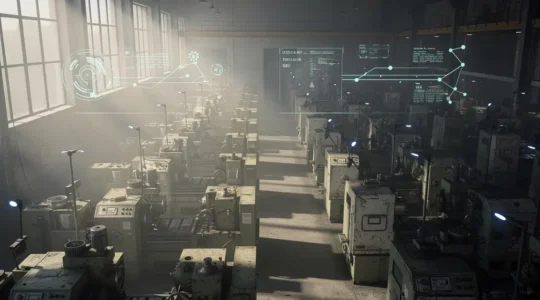
Predictive Agility in Legacy Plants: Turning Old Machines into Smart Assets
The key to competing with smart factories isn’t replacing your legacy equipment; it’s making your existing data actionable in real-time. Reactive maintenance is a significant drain, costing far more in downtime and lost opportunity than the investment in predictive technologies….
Read more